

The short answer
Yes, you can start a cloud computing career with no experience. Most people begin by learning four things: how computers and networks work, how cloud services are built, how to use a major platform such as AWS or Microsoft Azure, and how to secure cloud resources. Industry certifications such as CompTIA Cloud+ and Microsoft Azure Fundamentals (AZ-900)give employers proof of those skills. A structured program with live instruction and hands-on labs is the fastest way to learn them in the right order.
The rest of this guide explains what cloud computing is, which roles are open to beginners, which skills and certifications matter, and what a realistic learning path looks like.
What is cloud computing?
Cloud computing means using servers,storage, networking and software over the internet instead of owning and running physical hardware yourself. Companies rent what they need from providers such as Amazon Web Services (AWS), Microsoft Azure and Google Cloud,and they pay for what they use.
Cloud services usually come in threemodels:
• Infrastructure as a Service (IaaS): rented computing, storage and networking that you configure yourself.
• Platform as a Service (PaaS): a ready-made environment where you build and run applications without managing the servers underneath.
• Software as a Service (SaaS): finished applications you use through a browser or app.
Knowing the difference between these three models is one of the first things any cloud role expects.
What jobs can you get with cloud computing skills?
Cloud skills lead to several entry and mid-level paths in IT. Common roles include:
• Cloud Engineer: builds, deploys and maintains cloud infrastructure.
• Cloud Architect: designs how a company's systems are laid out across cloud platforms.
• Systems Administrator: keeps servers,users and operating systems running, increasingly in the cloud.
• DevOps Support: helps development teams deploy and monitor applications reliably.
Most people do not start as an architect. A typical path starts with an IT support or systems administration role, then moves toward cloud engineering as hands-on experience grows.
What skills do you need to learn?
You do not need to know how to code tobegin. A basic level of computer literacy is enough to start. These are the core skill areas to build, in this order:
1. IT fundamentals: common computing devices, operating systems and basic troubleshooting.
2. Networking: the OSI model, IP addressing and network security basics. Cloud is built on networking, so weak networking knowledge shows up quickly.
3. Linux: most cloud servers run Linux, so comfort with the command line matters.
4. Cloud platforms: hands-on work in AWSand Microsoft Azure.
5. Cloud security: protecting resources, managing access and understanding shared responsibility between you and the provider.
Skipping steps 1 and 2 is the most common mistake beginners make. It is tempting to jump straight into AWS, but the platforms make far more sense once the foundations are in place.
Which certifications should you start with?
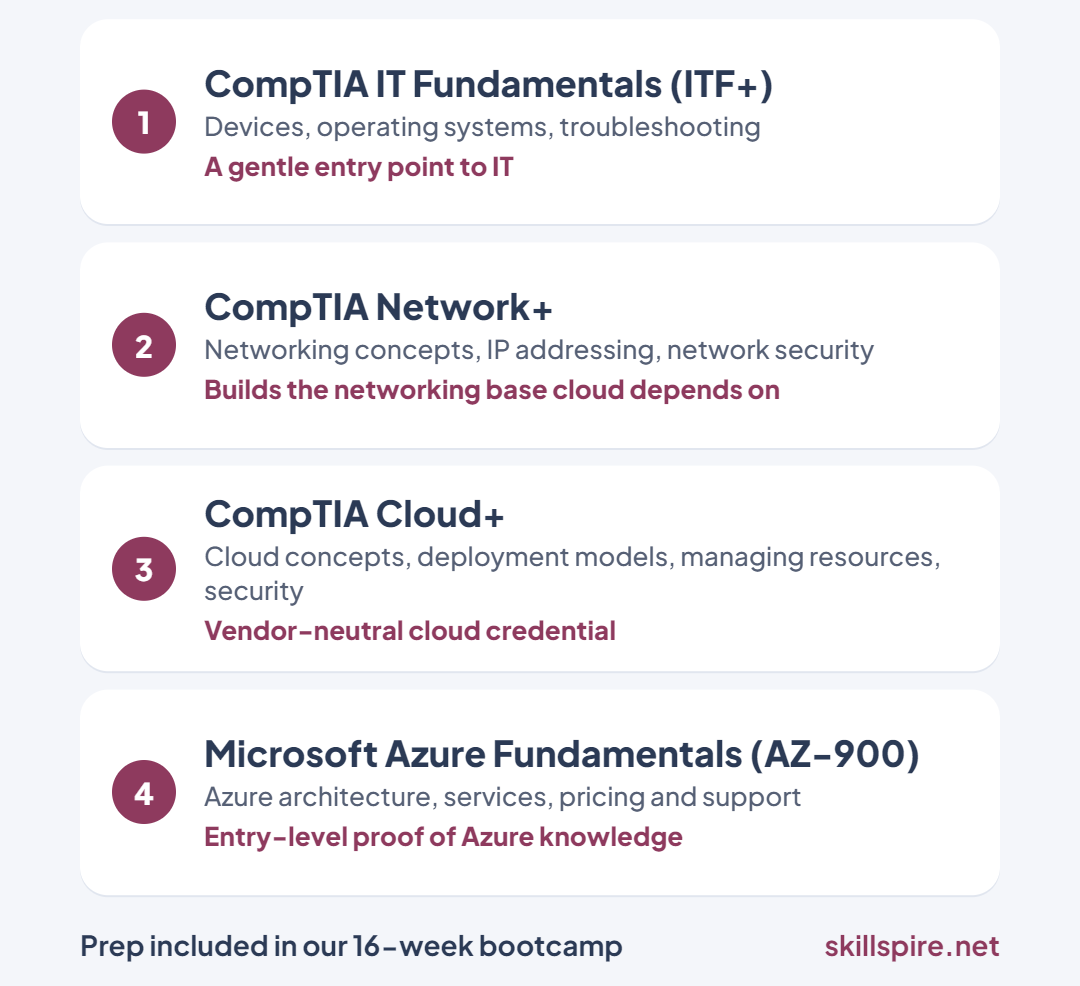
Certifications show employers that your skills have been tested against an industry standard. Four are a strong starting set for a cloud beginner:
How long does it take to learn cloud computing?
It depends on your starting point and how much time you can commit each week. Self-study often stretches out because there is no set order and no one to ask when you get stuck. A structured program shortens that.
Skillspire's Cloud Computing Bootcamp runs 16 weeks and 288 hours. Classes are instructor-led and combine live sessions,hands-on cloud labs, exercises and projects. The weekly schedule is built for working adults: weekday evenings, plus Saturday sessions. Students typically spend about 18 hours a week outside class on homework and study, so plan for that on top of class time.
What does the Skillspire Cloud Computing Bootcamp cover?
The curriculum moves step by step from foundations to cloud platforms:
• Week 1: Introduction to cloud computing,including IaaS, PaaS and SaaS and the benefits of cloud adoption.
• Week 3: CompTIA IT Fundamentals (ITF+)with exam preparation.
• Weeks 5 to 6: CompTIA Network+ topics,including the OSI model, IP addressing and network security basics.
• Week 7: CompTIA Cloud+, covering deployment models, managing cloud resources and cloud security fundamentals.
• Week 9: Microsoft Azure Fundamentals(AZ-900), covering Azure architecture, services, pricing and management tools.
Throughout the program you work on AWS,Microsoft Azure, Linux, networking and cloud security through labs and projects. Graduates who pass the final exam receive a certificate of completion.
Who is the bootcamp for?
The program is designed for:
• Complete beginners with basic computer skills and the motivation to learn.
• Career changers who want a structured route into tech.
• IT professionals moving from traditional on-premise infrastructure to cloud environments.
• Veterans and military spouses in Washington State, who may be eligible to use GI Bill® benefits or other VA education funding for the in-person program at the SeaTac campus.
You can learn in person at the SeaTac,Washington campus or, for remote cohorts, from anywhere in the U.S. Veterans using VA education benefits must attend in person.
Frequently asked questions
Do I need to know how to code to work in cloud computing?
No. Many cloud and systems roles focus on infrastructure, networking and security rather than software development. Basic computer literacy is enough to start, and scripting skills can be added later.
Is cloud computing a good career for beginners?
It can be. Cloud adoption touches almost every industry, and there are entry points through IT support, systems administration and cloud support roles. Building foundations and earning entry-level certifications first makes the transition easier.
Should I learn AWS or Azure first?
Start with the concepts, then pick one platform to go deep on. The ideas carry over between providers. Learning both,as in the Skillspire bootcamp, makes you more flexible because many employers use more than one.
How much does the Skillspire Cloud Computing Bootcamp cost?
The introductory price is $6,499 plus tax,down from $6,999, when paid upfront. Flexible payment plans are also available. Contact Skillspire for current options and scholarship eligibility.
When does the next cohort start?
The next in-person cohort at the SeaTac campus starts November 3, 2026 and runs through March 2, 2027. Seats are limited, so check the course page for current enrollment status.
Ready to start?
If you want a clear, step-by-step path intocloud computing, with live instruction, hands-on labs and certification prep,take a look at the full syllabus and cohort dates.
GIBill® is a registered trademark of the U.S. Department of Veterans Affairs.Pricing and cohort dates are accurate as of October 2026 and may change.


